Alien Evolution Lab
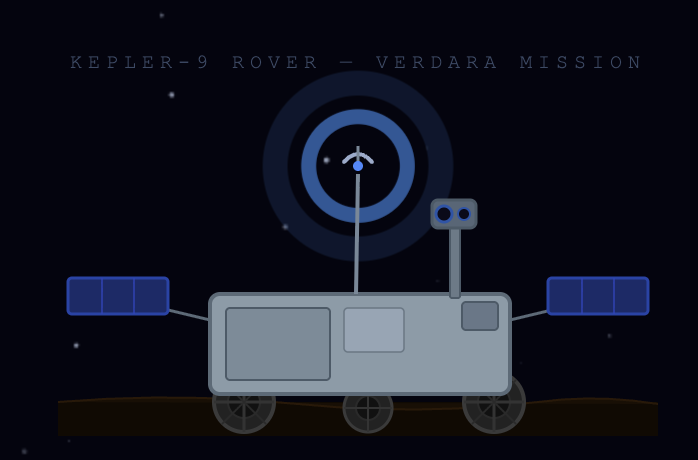
You’ve just received a transmission from exoplanet Verdara. NASA’s Kepler-9 rover has photographed eight alien life forms and it’s your job to figure out how they’re related. In this interactive AP Biology simulation, you play the role of an evolutionary biologist, building and validating a phylogenetic tree (cladogram) using three independent lines of evidence: morphological traits, DNA nucleotide sequences, and protein amino acid sequences. Then you dig deeper; placing fossil specimens on your tree and using carbon-14 decay data to calculate how old they are. By the end, you’ve done what real scientists do: built a phylogenetic hypothesis and tested it against multiple types of evidence until they all converge on the same answer.
Concepts and skills covered:
-Constructing a cladogram from shared derived characters (synapomorphies)
-Distinguishing ancestral traits from derived traits using an outgroup
-Reading and comparing aligned DNA nucleotide sequences to infer evolutionary relationships
-Reading and comparing protein amino acid sequences as molecular evidence for common ancestry
-Placing fossil specimens on an existing cladogram using partial trait and sequence data
-Interpreting a carbon-14 decay curve to calculate the age of fossil specimens
-Understanding that phylogenetic trees are testable hypotheses, not fixed facts