 QUIZ
QUIZ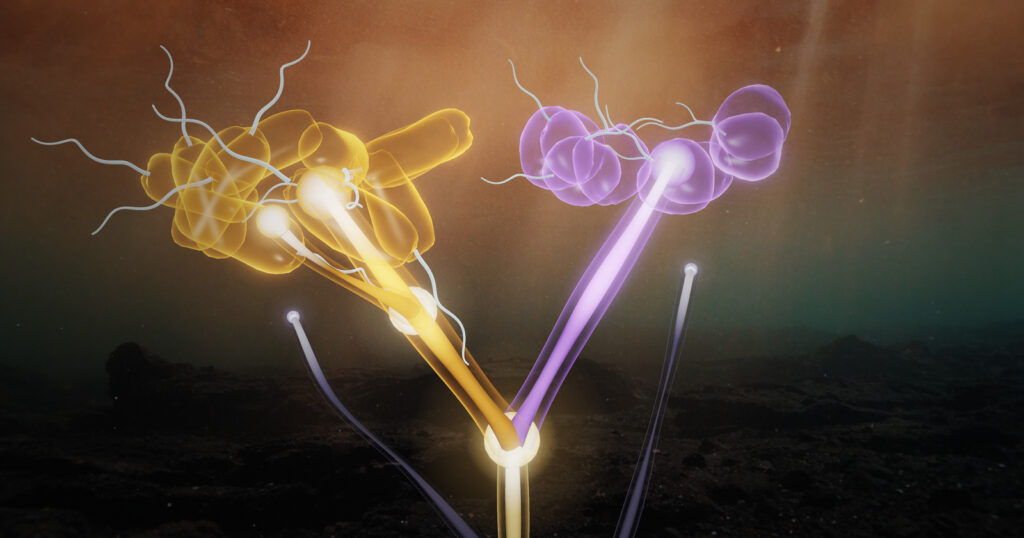 Launch ↗
 Common Ancestry Interactive
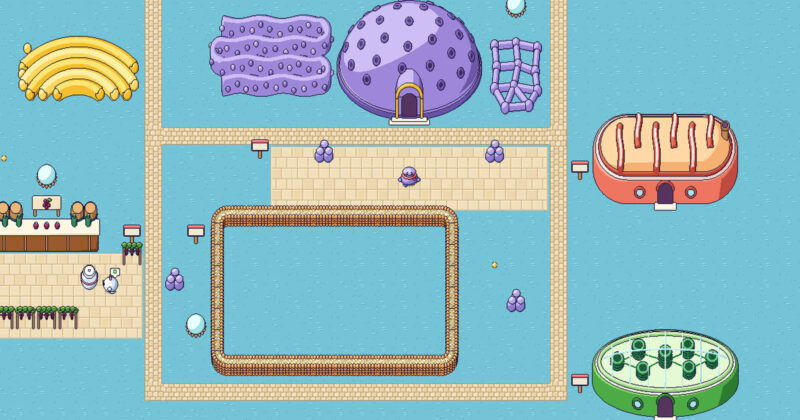
Common ancestry is often taught with a tree diagram alone, hiding the evidence inside cells. Here the tree grows from LUCA, the last universal common ancestor, to bacteria, archaea, plants, animals and fungi alive today. LUCA was not the first life, and its ribosomes already read a genetic code nearly every cell still uses. Natural selection, shown in prokaryotes competing for limited food, returns at every stop. Once oxygen from cyanobacteria builds up, cells using it as a new final electron acceptor make more ATP from the same food. An oxygen-using bacterium, taken in and not digested, becomes the mitochondrion over many generations; later a cyanobacterium becomes the chloroplast in the algae and plant line. The tour ends with glycolysis and oxidative phosphorylation in all three domains, evidence of common ancestry.
Launch InteractiveTopics covered
- Matching tRNA anticodons to mRNA codons
- Proton gradients driving ATP synthase
- Random mutation and shifting trait frequencies
- Oxygen released by splitting water in photosynthesis
- Archaea as the closest relatives of eukaryotes
- Evidence of endosymbiosis in mitochondria and chloroplasts
- Membrane-bound organelles, linear chromosomes and introns shared by eukaryotes
- Reading tree nodes as common ancestors
- Why fungi are closer to animals than to plants